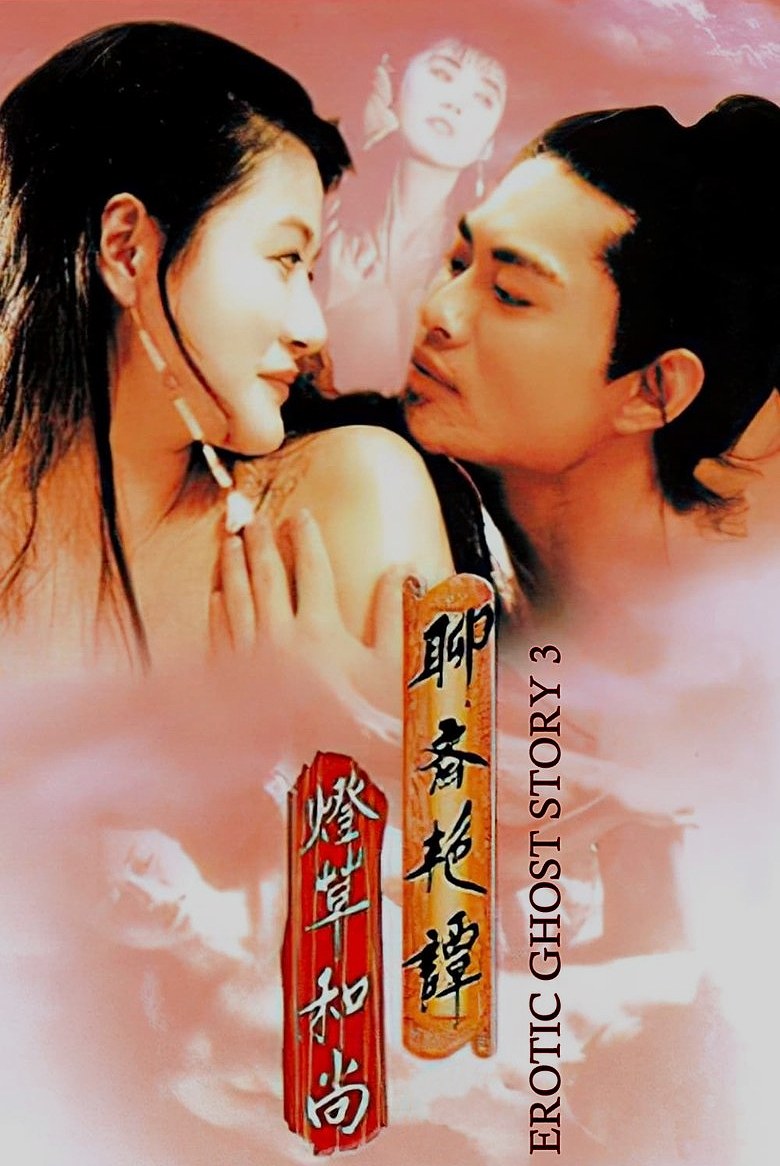
Going back to the 90s, Chinese Hong Kong horror films were another genre that captivated audiences across Asia, especially the 'A Chinese Ghost Story' series, which had several sequels. In 1992, the third installment, The Lamp-Lighter, changed from zombies to a story about an enchanted painting and an evil monk who kidnaps beautiful women. Although the production may look dated by today's standards, the film's charm still lies in its fun, classic old-school Chinese movie style.
Plot Summary (No Spoilers)
The story begins when 'Chu Chung' (Kenny Wong), a young adventurous traveler, accidentally meets an old monk with magical powers named 'Ho Shang' (Shing Fui-On), who has a beautiful and mesmerizing wall painting. The painting features a gracefully dancing young woman named 'Wan Yee Mung' (Pauline Chan), causing Chu Chung to become infatuated and sucked into the world of the painting. There, he discovers that the beautiful woman in the painting is merely a victim held captive, and the evil monk plans to drain their life force. Chu Chung must find a way to help the women and escape the illusory world before his life is consumed.
Acting and Characters
The lead actors perform their roles appropriately. Pauline Chan as Wan Yee Mung, the beautiful captive, effectively conveys pleading and vulnerability. Kenny Wong as Chu Chung portrays a hero who is both naive and decisive. Meanwhile, Shing Fui-On as the evil monk successfully brings out the character's wickedness and scariness with depth. The villain is not just evil without reason but has a backstory that allows the audience to somewhat understand him. Other characters like Liu Si Si (Chik King-Man) add color to the story. Although some scenes feel overacted in typical 90s Hong Kong style, it doesn't feel jarring.
Direction, Visuals, and Music
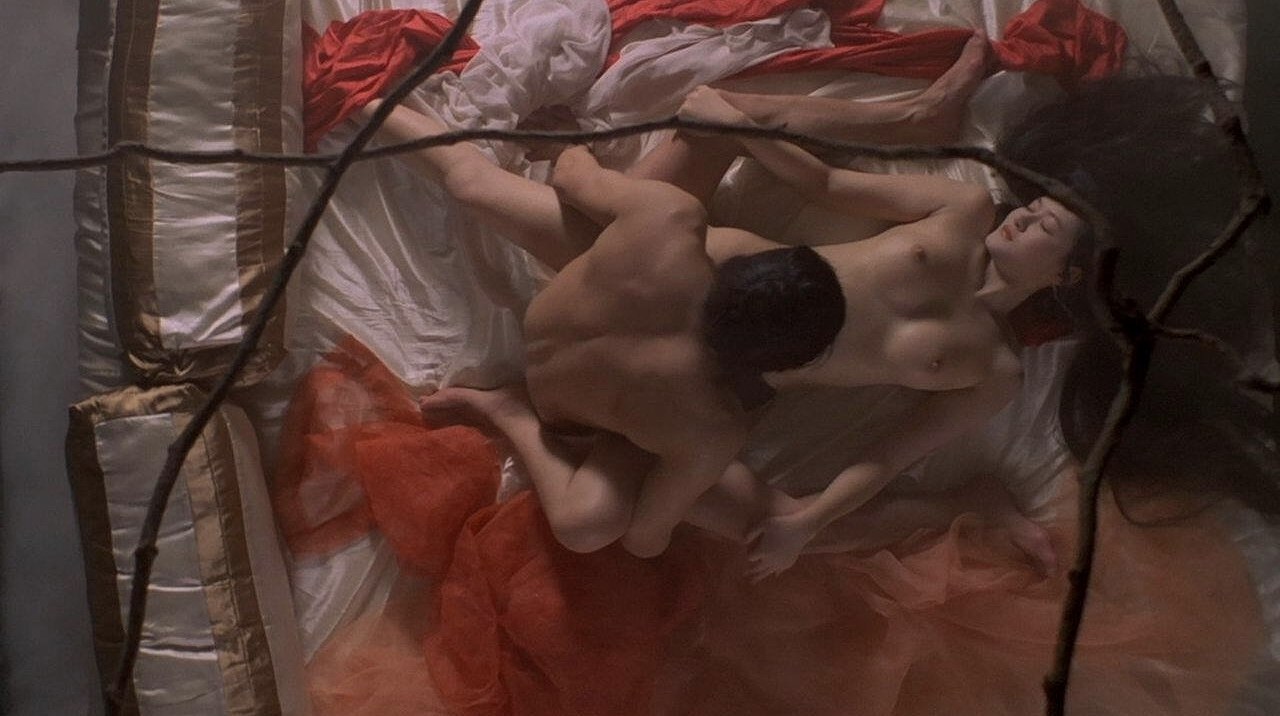
Director Ivan Lai uses old-school visual effects that now look retro but give a nostalgic and eerie feel. The scenes inside the painting world are designed with vibrant colors, contrasting with the dull real world. The use of light and shadow helps create a mysterious atmosphere, especially in the scene where the hero is sucked into the painting, using editing and superimposition techniques that, though not seamless, are fun and engaging. The soundtrack consists of ancient Chinese music that fits the overall atmosphere, enhancing both horror and romantic scenes effectively.
Editorial Analysis
Although The Lamp-Lighter is not a legendary must-see horror film, it has a unique charm worth watching, especially in terms of content that incorporates reflections on desire and obsession with outward appearance. The painting represents a trap of lust; once humans become engrossed, it's hard to escape. The film prompts thoughts about the balance between the real world and the illusory world, and being aware of the tricks of malicious people. Additionally, there is a slight feminist perspective when the women are not just victims but become sacrificial and play important roles in saving themselves. However, the obvious drawbacks are the outdated effects and some convoluted plot points, which may make modern audiences less engaged.
Verdict
For fans of 90s cinema or those who enjoy classic Chinese horror films, The Lamp-Lighter is another film worth watching for fun and to reminisce about the atmosphere of old movies. But if you are someone who wants the refined experience of modern horror films, you might not enjoy it as much.
Screenshots


👍 Pros
- +The story offers reflections on desire and obsession
- +Good acting, especially Shing Fui-On as the evil monk
- +Retro atmosphere and visuals give an eerie feel
👎 Cons
- −Outdated visual effects and filming techniques
- −Some parts of the plot are slow and convoluted
Top Cast



FAQ
The film was released in 1992 as the third installment of the Hong Kong Chinese horror series.
The series has multiple parts, but the third part is titled The Lamp-Lighter or 聊齋三集之燈草和尚.
The level of fear is moderate, focusing more on mysterious atmosphere and ancient Chinese horror rather than jump scares.